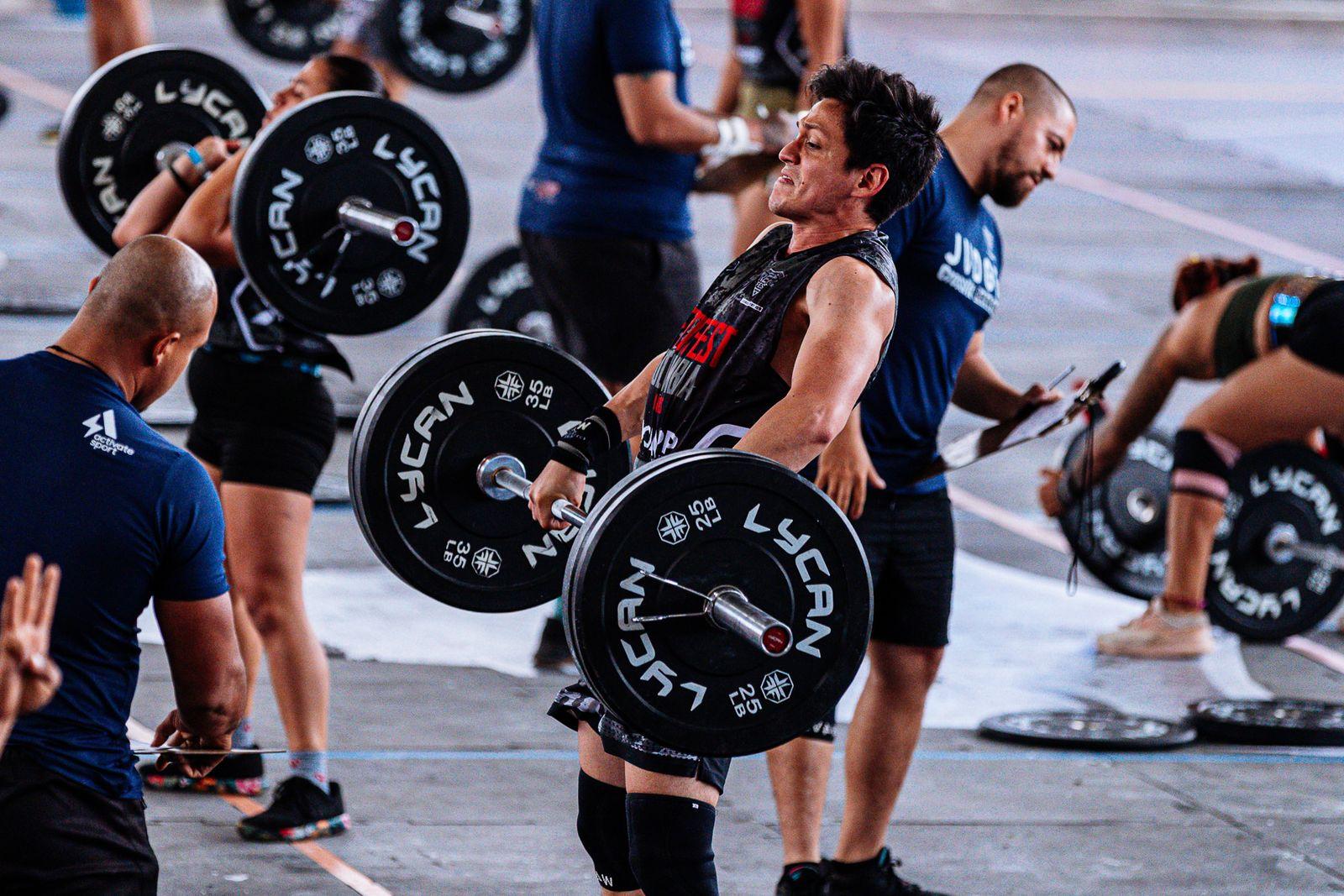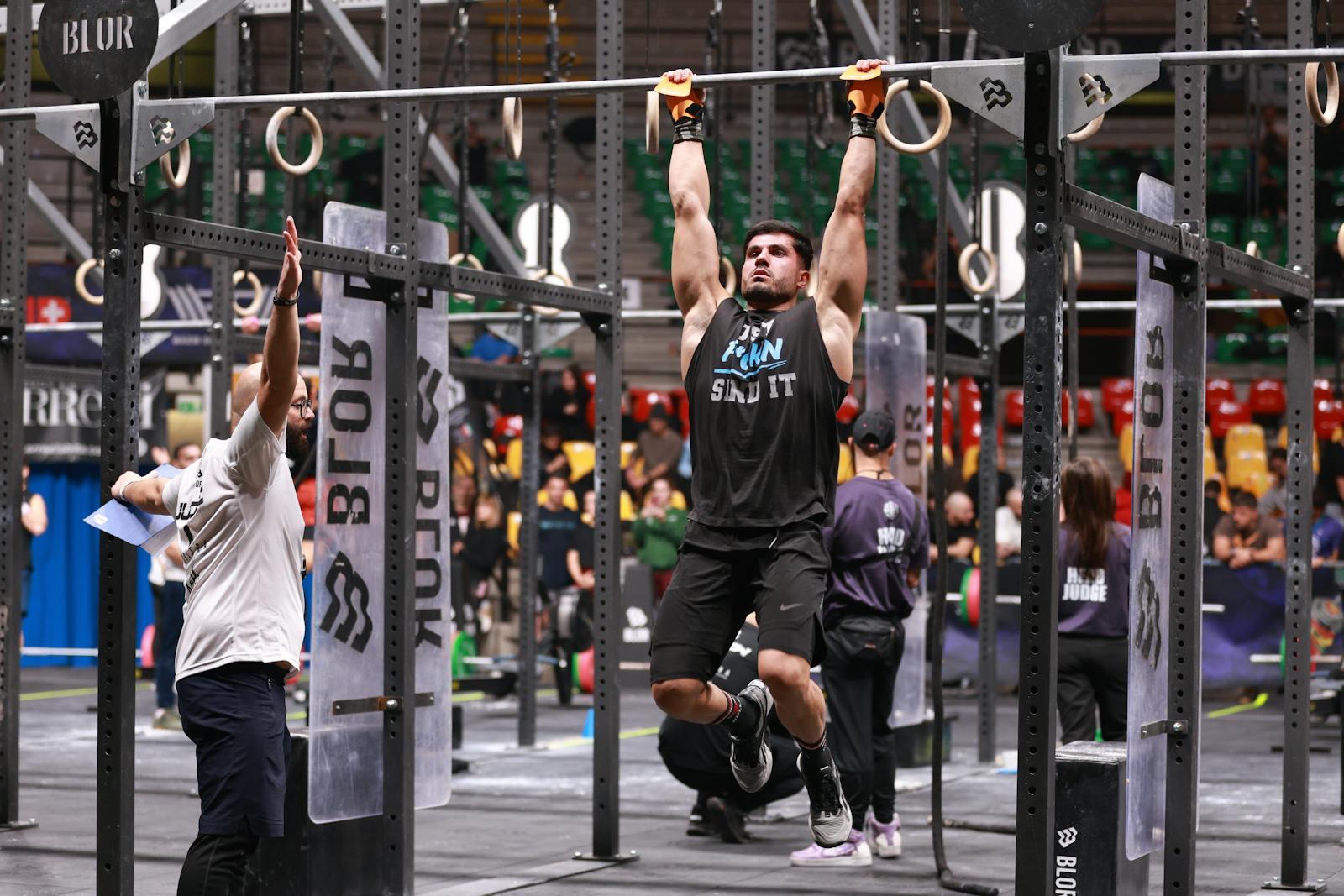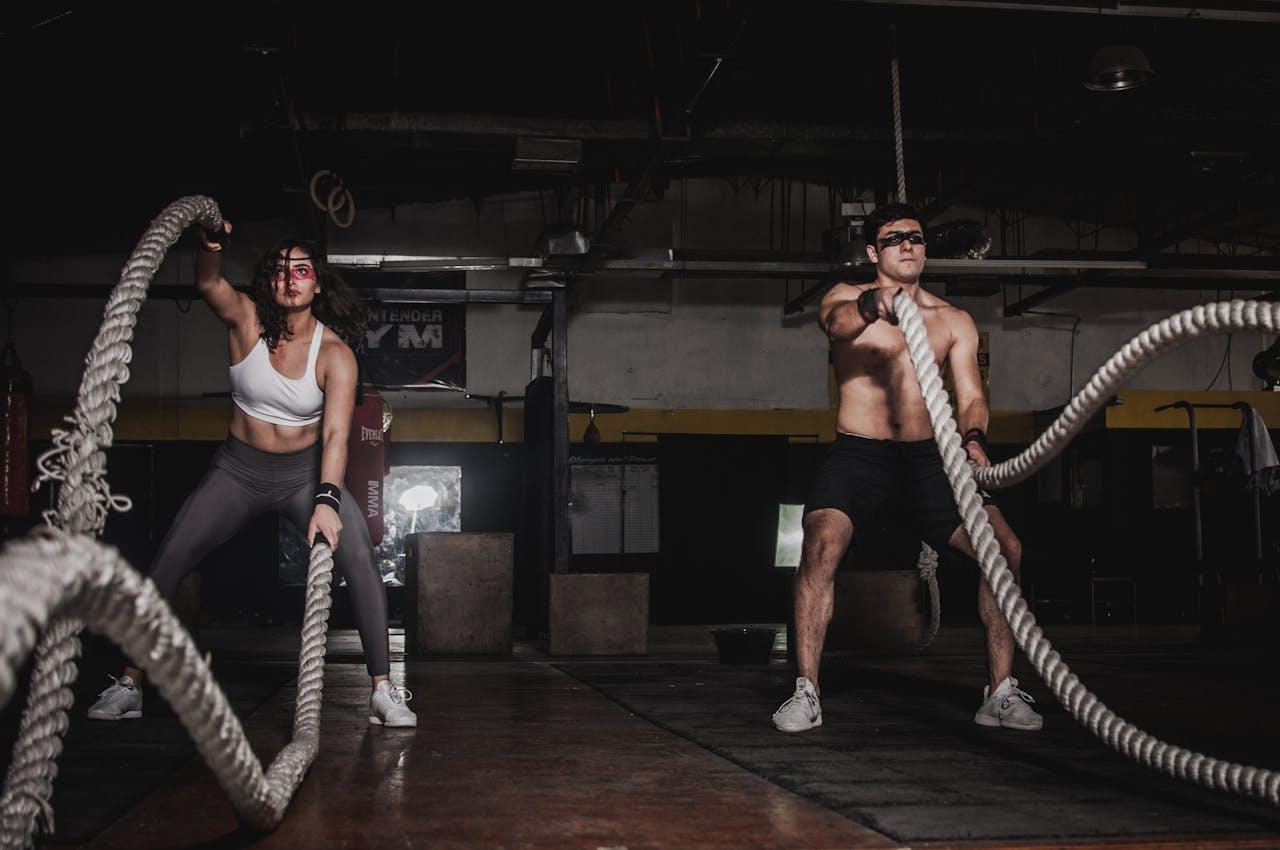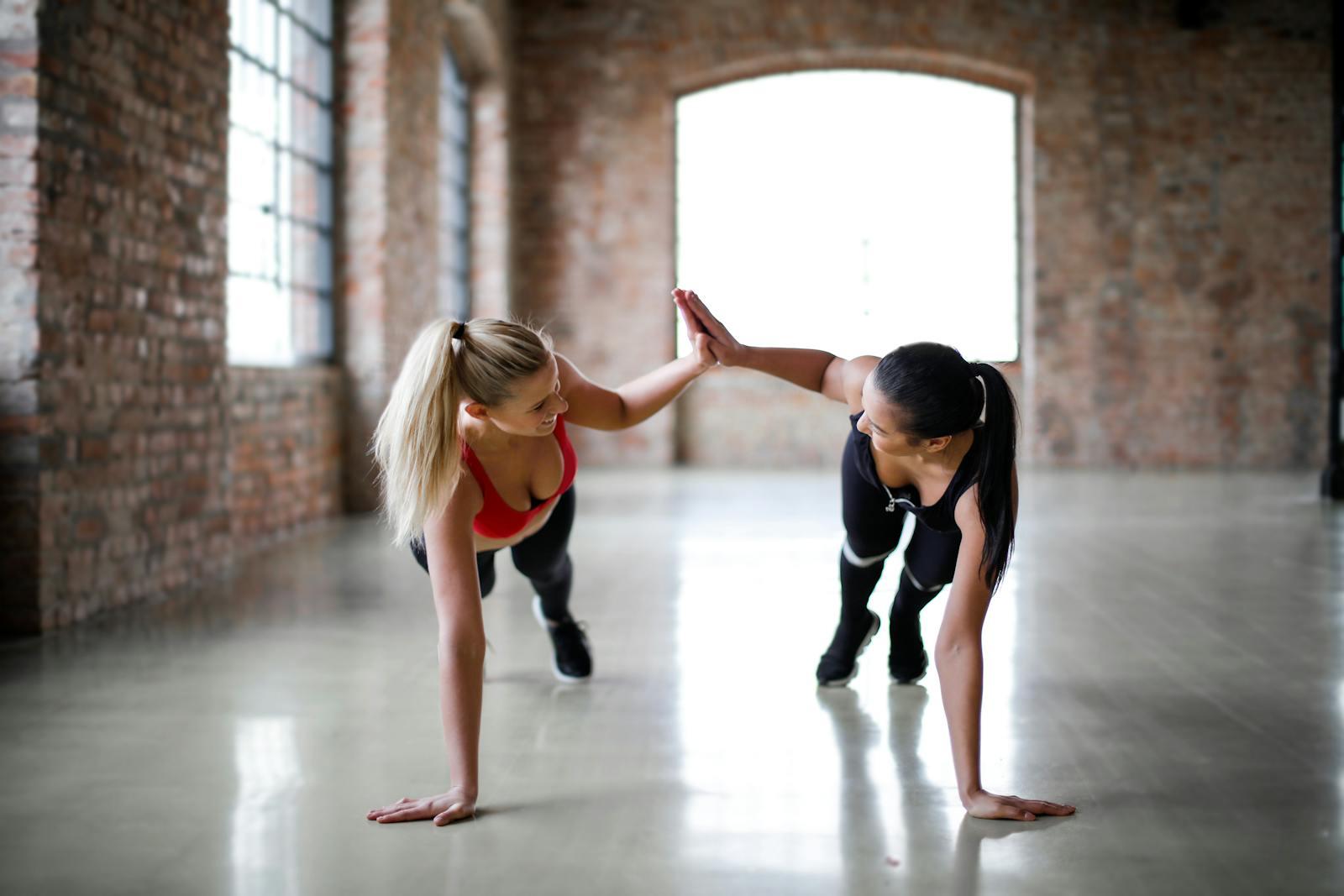
Partner and team formats are booming in functional fitness and Hyrox events. You sign up as a pair or a squad, split the load, and celebrate together. But a solid team doesn't happen the day before the start line. Here's how to build a duo that actually performs.
Pick the right partner
The classic trap: signing up with your best mate without asking whether you're athletically complementary. A working duo isn't built on friendship — it's built on profiles that match up.
Three questions to answer before you commit:
- Similar cardio base — if one of you rows 500 m in 1:40 and the other in 2:30, half the team waits
- Different strengths — one barbell specialist and one gymnast beats two squat monsters
- Real availability to train together at least once or twice a week
On a team of four (mixed or not), balance power (heavy lifts) and lightness (cardio/gymnastics). Two heavy frames rowing at 120 kg will cost you minutes on wall balls.
Split the reps smartly
In competition, the rep-split strategy often decides 30 seconds on the clock. Two approaches dominate.
Blocks
You cut the exercise into big chunks: 50/50, 40/30/20/10, or a pyramid. Useful on long movements (30 cal assault bike, 50 burpees).
Ping-pong
You alternate every 2 or 5 reps, no pause. Best for explosive movements where you gas out fast (thrusters, snatches). One works, the other recovers actively.
The winning team isn't the one doing the most reps — it's the one whose clock never waits for anyone.
Universal rule: the stronger partner does more on a given movement. But they need to stay fresh enough for what comes next. Don't burn your partner on round one.
Drill your transitions
On a team WOD, 30 to 40% of total time is spent in transitions. Med ball handoffs, hand tags, station changes — every second adds up.
A few concrete rules:
- Clear protocols — "I tap your hand when I'm done", zero ambiguity
- Waiting position: ready, next to the machine, open hand
- Bar on the floor: set it down cleanly, don't throw it — it needs to roll to your partner
In training, time your handoffs. A sharp team gains 5 to 10 seconds per transition. Across 4 stations, that's 40 seconds on the final clock.
Communicate under fatigue
Talking while gasping at 180 bpm isn't natural. But that's exactly what separates average duos from race-tested ones.
Agree on 3 to 5 short keywords in advance:
- "Done" — my set is over, your turn
- "Switch" — I'm cracking, take over now
- "Go" — push harder, we've got this
- "Chill" — ease off, recover 10 seconds
During warm-up, you talk. During the WOD, you signal, you push each other, you never criticize. "Come on, you got this" beats "hurry up" every time.
Simulate race conditions in training
A team that has never worked together under race pressure will fold on the day. Program at least 3 or 4 partner WOD sessions in the month before the event.
Ideally, cover:
- A long WOD (> 15 min) to test pacing in pairs
- A sprint in ping-pong format to test fast transitions
- A WOD with Olympic lifts to practice barbell handling
You can also borrow ideas from our mental preparation before competition guide — the principles apply to team efforts too.
A tight team can beat duos that are individually stronger. The key: shared training sessions, clear keywords, and a partner who knows when to push and when to hold back. Ready to race as a pair? Find a team competition on MBC Arena and start blocking your prep sessions now.