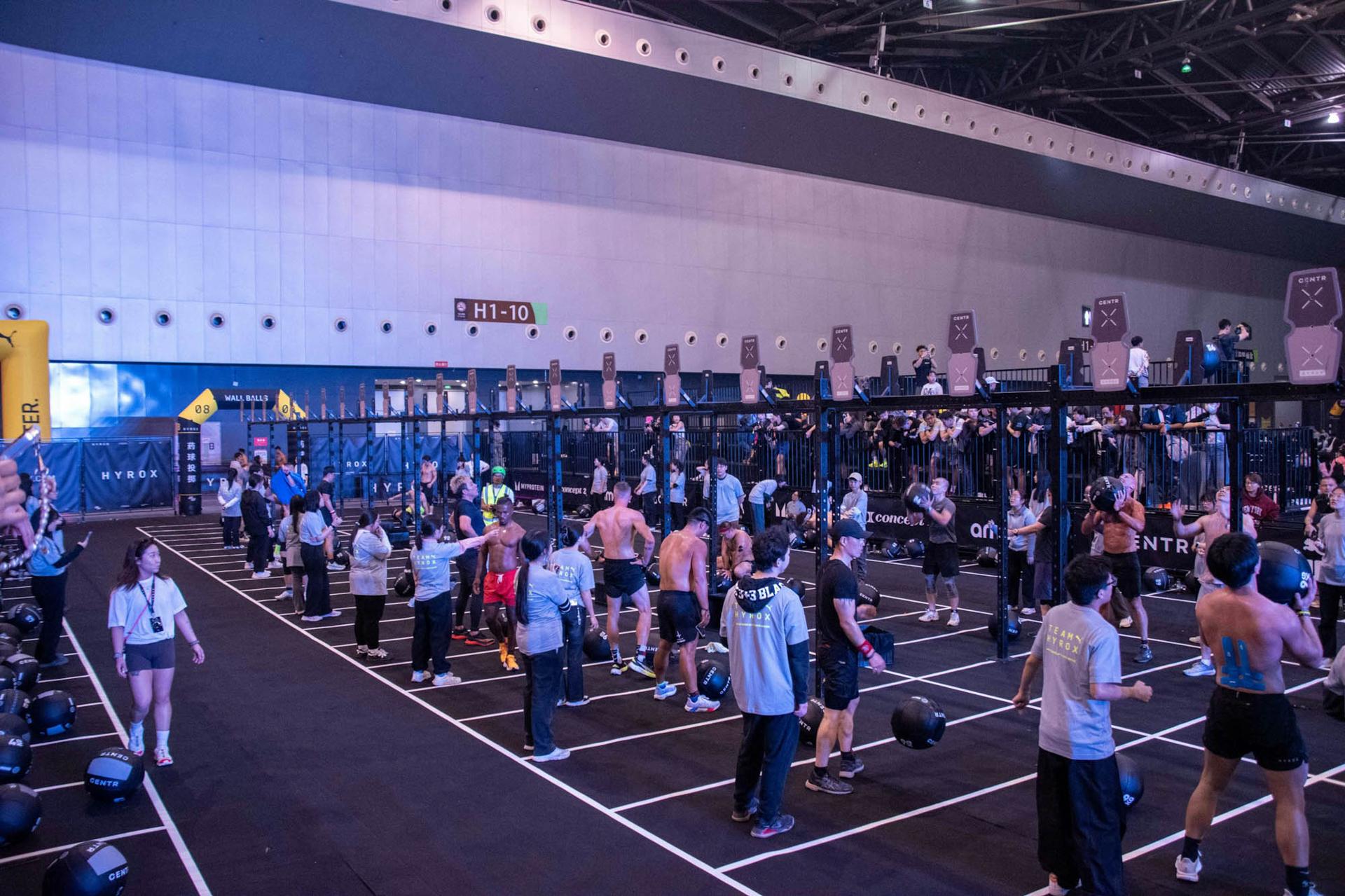
In a Hyrox race, the winner isn't necessarily the strongest. It's often the one who knows how to pace their effort without ever blowing up. 8 km of running split across 8 stations is long, and one slip can cost 5 minutes on your final time. Here's how to build a solid strategy for your race.
The golden rule: start too slow
The first 400 meters are a trap. The adrenaline, the crowd, the other athletes sprinting — you'll want to follow. Don't. Your starting pace should be 10 to 15 seconds per kilometer slower than your target race pace.
Concretely: if your target 8 km pace is 5:00/km, start at 5:10 or 5:15. You'll feel it's "easy" for the first 800 meters. That's exactly what we want.
The goal is to finish the race faster than you started it. Nobody regrets going too slow at the start.
Breaking down the 8 stations
Each station has its own effort profile. Here's how to tackle them.
1. SkiErg (1,000 m)
First real cardio hit. Your mistake would be to pull flat-out to "gain time". Keep a steady cadence (28-32 pulls/min), arms + abs, legs pushing. Exit at 75-80% intensity, no more.
2. Sled Push (50 m)
The scariest station and the biggest juice drain. Take the time to set up low, torso angled, arms extended. Small steps, not big strides. If you stall, you lose 30 seconds restarting the sled.
3. Sled Pull (50 m)
Once familiar, it's easier than the push. Alternate pulling and walking toward the sled. Don't sprint: you need your legs for the burpee broad jumps coming up.
4. Burpee Broad Jumps (80 m)
Where many athletes crack mentally. 80 meters of burpee + jump is long. Find a sustainable rhythm from the first burpee. If you go out hard, you'll slow down then walk. One burpee every 5 seconds, steady, wins.
5. Rowing (1,000 m)
Gift station if your technique is clean. Cadence 25-28, legs drive first, arms second, controlled return. Don't play dead: this is where you gain time back. But keep juice for the farmers carry.
6. Farmers Carry (200 m)
No point trying to run. Fast walk, solid grip, upright posture. If you drop the weights, you lose 5 seconds. If you can, do the full 200 m unbroken. The second half, your forearms will burn — it's normal.
7. Sandbag Lunges (100 m)
Where the legs talk back. Find your pattern: right-left-right-left without pause, keeping the bag high on your shoulders. Don't look ahead — you'll see 80 m remaining and crack mentally. Look 2 m in front of you, one step at a time.
8. Wall Balls (75-100 reps)
The last station. Split into blocks of 10 or 15, micro-break (2-3 seconds), go again. Never take a big break: that's where you lose the most time. Focus on full extension on every rep, or a judge may not validate.
Transitions: where it all happens
Between each station, there's a 1 km run. Rookies attack these runs hard to "get back into rhythm". Bad idea.
The first 200 meters after a station, your legs don't respond. Accept that your pace will be 20-30 seconds slower on these 200 m and build back up. Don't force it, regulate your breathing first, then pick up the pace.
The best Hyrox racers aren't the fastest runners — they're the ones who never slow down on transition runs.
The 3 rules to remember
- Start too slow > start too fast — always
- Never drop the weights on farmers carry and sandbag lunges if you can help it
- No break longer than 10 seconds on rep-based stations (sled, wall balls, burpees)
Once you've nailed these rules, you can chase a clean time. For your first race, just finishing without walking or stopping is already a big win. Want to get started? Find a Hyrox on MBC Arena and lock in a date.