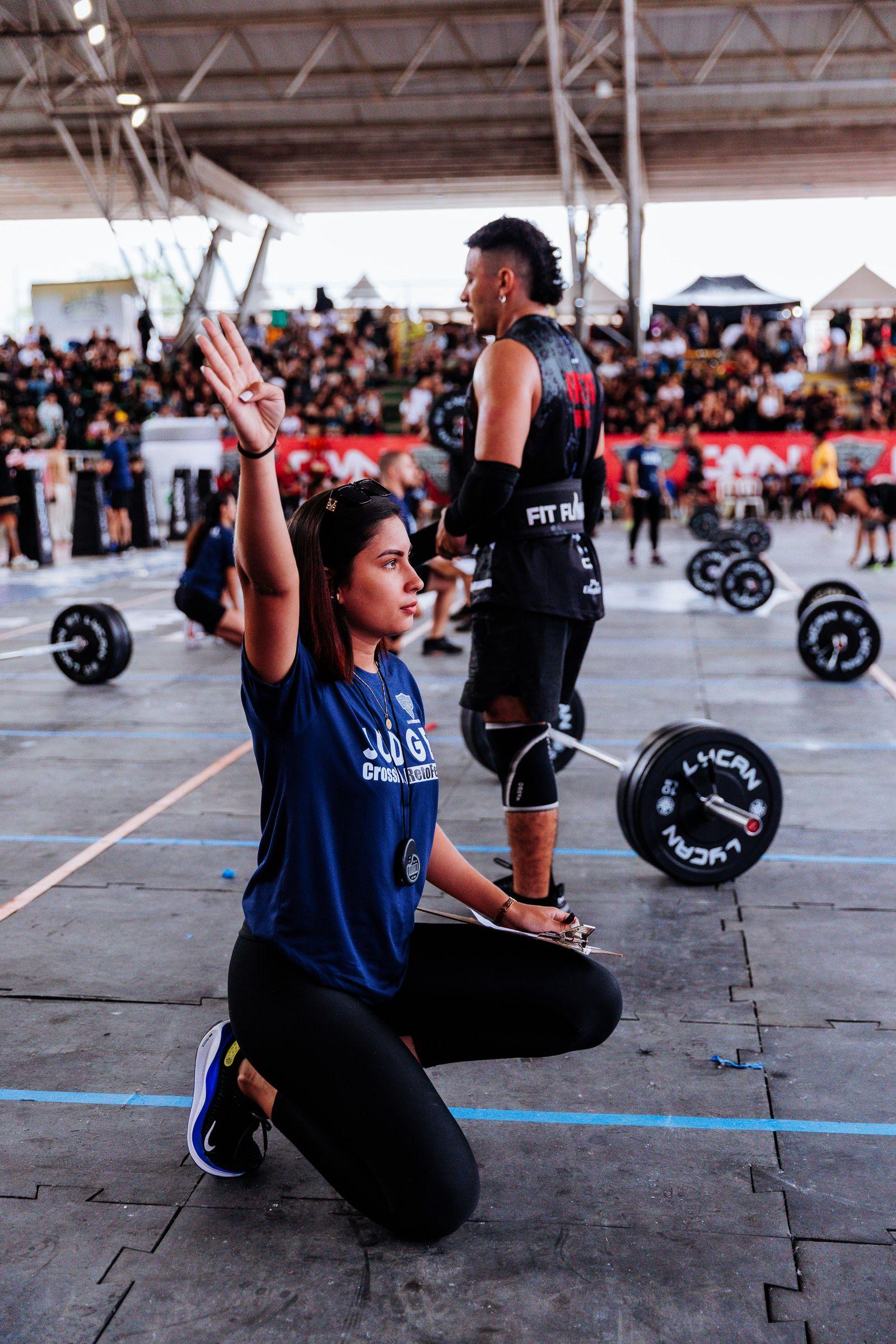
In a functional fitness competition, you tackle several WODs across the day. But how are athletes ranked at the end? It all comes down to a points system. Understanding it means knowing where to spend your energy and how to read a leaderboard correctly.
Why every WOD matters in the standings
A competition adds up the results of several events. Each WOD produces a partial ranking. That ranking is then converted into points. The total across all events decides the final podium.
The direct consequence: the best athlete on a single WOD isn't necessarily the winner. Consistency across the board is what pays off. An athlete who's never first but always in the top 5 often beats the one who wins an event then collapses on the rest.
A competition is rarely won on a single WOD. It's won through consistency, event after event.
How points are awarded for each event
Two main systems coexist depending on the competition.
- Sum of placements: 1st place scores 1 point, 2nd scores 2 points, and so on. The lowest total wins. Simple and readable, it's the most common system at local competitions.
- Descending points: each placement is worth a decreasing number of points, with 1st scoring the most. You add them up, and the highest total wins. This is the logic of major circuits, such as the CrossFit® Games.
Either way, the principle is the same. You convert a raw performance — a time, a number of reps — into a placement, then that placement into points.
Time or reps: reading what the score means
What a result means depends on the event format. Two cases:
- For Time, EMOM, Chipper: you measure time. The fastest wins, the lowest clock is best.
- AMRAP, max reps, max load: you measure a quantity. The highest number wins.
Knowing this logic prevents misreading a board. To brush up on each format, our guide to WOD formats breaks down AMRAP, EMOM and For Time.
Ties and unfinished events
Two situations come up often in the standings.
Ties first. Two athletes with an exactly identical result share the same placement. The next rank is skipped: two second places, and no third.
Time caps next. When you don't finish the event within the allotted time, you're ranked by the reps completed at the cap. Finishing the WOD always beats being stopped at the clock. And every no rep is costly: an invalidated movement means one less rep, and sometimes several lost places. Our movement standards guide explains how to avoid them.
Following your ranking live
The big advantage of a dedicated platform is real-time tracking. On MBC Arena, the leaderboard recalculates as events are validated. Each division has its own board, because levels aren't mixed: the RX or Scaled choice places an athlete in the right group.
That way you follow your progress event after event, without waiting for the day to end. Want to see it in action? Check out the live leaderboards and pick your next challenge on the competition calendar.