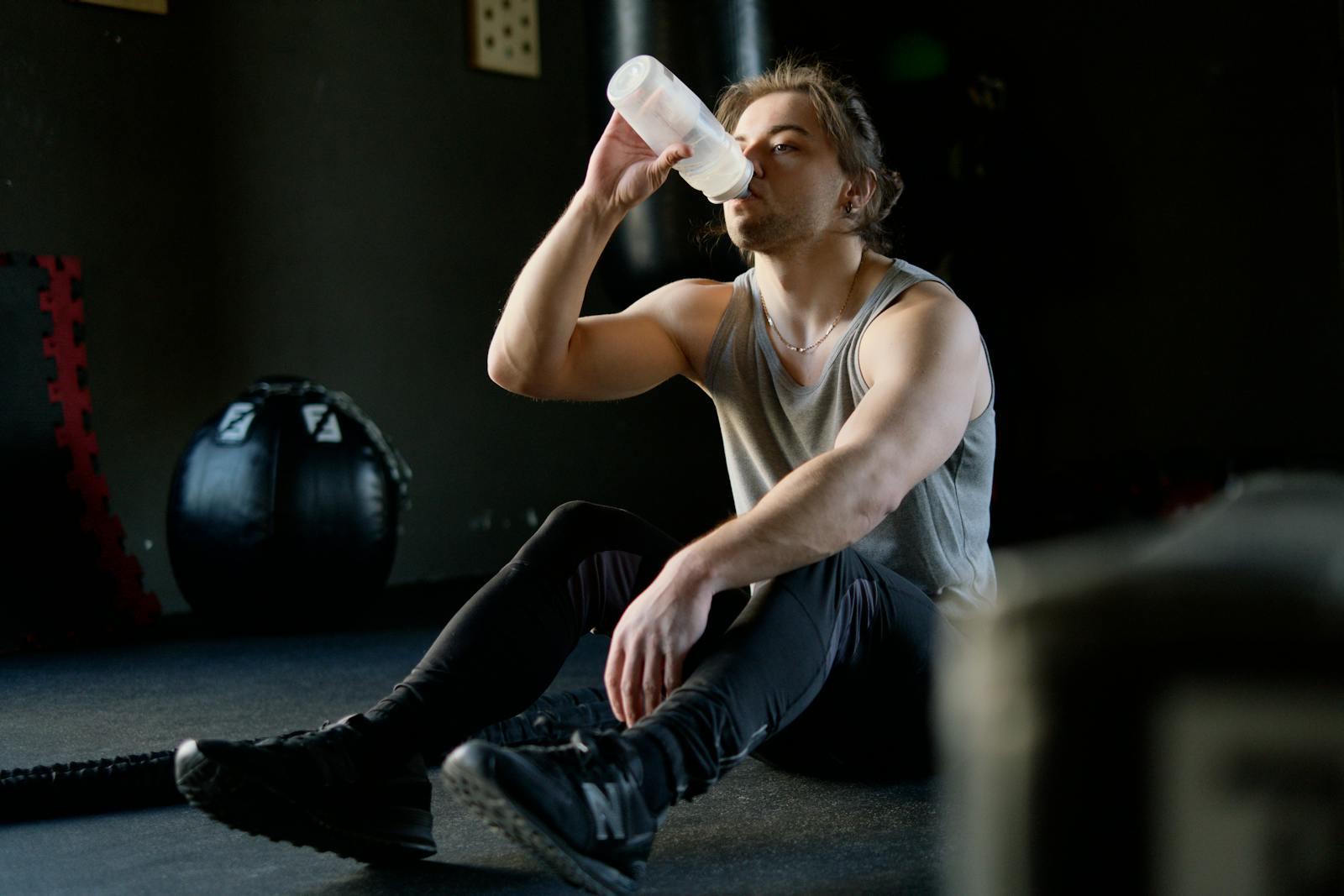
We often talk about nutrition, but hydration is the fastest lever to wreck a performance. A loss of just 2 % of body weight in water is enough to drop power output by 10 to 15 %. On a short timed format, that costs seconds. Over a three-WOD day, it costs a ranking.
Why hydration matters so much for performance
Water regulates body temperature, carries nutrients and drives muscle contraction. When blood volume drops, the heart compensates by speeding up — which raises heart rate at the same load.
Concretely, a dehydrated athlete feels the same effort as harder. Cramps, nausea and blurry workout reading show up earlier. On a chained CrossFit® format, the no-rep risk rises too, because fine coordination fails before raw strength does.
By the time you feel thirsty, you're already in deficit. Thirst lags 30 to 60 minutes behind actual need.
The week before: filling the tank
Hydration is built over several days, not on the morning of game day. From D-5, aim for a steady intake slightly higher than usual.
- 30 to 35 ml per kilo of body weight per day — that's 2.4 to 2.8 liters for an 80 kg athlete
- A bottle always within reach — at the office, in the car, at the gym
- Clear urine as a reliable hydration check
- Limit alcohol during the week — it disrupts sleep and dehydrates
The night before, don't slam water right before bed. One big glass is enough — otherwise you'll wake every two hours and the night is wrecked. To frame this prep week, our piece on sleep and performance pairs well with this topic.
Game-day morning: aim, don't overload
Three simple steps on waking:
- 300 to 500 ml of water right after waking, with a pinch of salt or an electrolyte tab
- 150 to 250 ml more with breakfast, no excess
- Stop 45 minutes before warmup so you're not starting with a full bladder
A light isotonic drink beats plain water alone if the competition starts early. It delivers sodium and carbs, two useful fuels from the very first WOD.
During the competition: small sips, often
This is where most athletes get it wrong. Chugging a big bottle between two WODs weighs down the stomach and triggers reflux and side stitches.
The right mechanic:
- 150 to 250 ml every 15-20 minutes of waiting
- Cool but not iced water — around 10-15 °C is the optimal absorption range
- A sodium-loaded drink when sweating is heavy or temperature climbs above 20 °C
- No more than 800 ml per hour — past that, the body can't absorb it
Between two tight events, fractionate: three sips, breathe, three sips again. That hydrates without weighing on digestion. This logic combines with nutrition between WODs to keep energy up without bloating.
The role of electrolytes
Plain water isn't enough when you sweat for hours. Sodium, potassium and magnesium leave through sweat — and a shortage triggers cramps and a coordination drop.
Three options that work in competition:
- Off-the-shelf isotonic drink — practical, dosed, but test it in training first
- Water + pinch of salt + lemon juice — simple and cheap
- Electrolyte tablets — light to carry, dilute in the bottle
Hyponatremia (too much water, not enough sodium) is rarer but serious: headaches, confusion, nausea. It mostly hits athletes who chug plain water during long formats. The fix is two words: salt and carbs.
After the effort: refilling the deficit
Few athletes weigh in before and after a competition, but it's the only reliable way to measure fluid loss. For every kilo lost, drink 1.2 to 1.5 liters back in the following 4 hours. Not in one go — in regular small amounts, ideally paired with a meal that also provides sodium.
Good hydration recovery also shapes that night's sleep and the next day's recovery session. To push recovery further, our guide on recovery after competition covers the other levers.
Hydration is one of those details you only notice when it's missing. Done right, it doesn't win you anything — done wrong, it loses everything. To put this work into practice, check the competition calendar and prep your next event seriously.