We train our legs, our engine, our strength. Breathing, though, we just endure. Yet on a WOD — in cross training or CrossFit® alike — it's usually the breath that cracks first, not the muscles. Managing your air is how you hold a pace while everyone else falls apart.
The Breath Gives Out Before the Muscles
Under intense effort, the body demands oxygen faster than we can supply it. The heart rate spikes, the oxygen debt grows, and the suffocating feeling sets in. At that point, it isn't the legs calling it quits. It's the breath.
The classic trap is starting too fast. The first reps feel easy, you push the pace, and your breathing falls apart by the second block. There's no catching it back mid-effort. It's one of the most common mistakes in competition.
Breathe in Rhythm With the Movement
Chaotic breathing wastes energy. The idea is to lock your breath to the movement, in a steady, predictable pattern.
- Cyclical movements (rower, assault bike, double-unders): one inhale, one exhale on a fixed cycle
- Repeated lifts (wall balls, thrusters): exhale on the effort, inhale on the way down
- Running and transitions: tie your breathing to your footfalls — for example, inhale over three strides, exhale over two
A steady breath works like a metronome. It sets a tempo and stops you from drifting into the red without noticing.
Brace and Breathe Under a Heavy Load
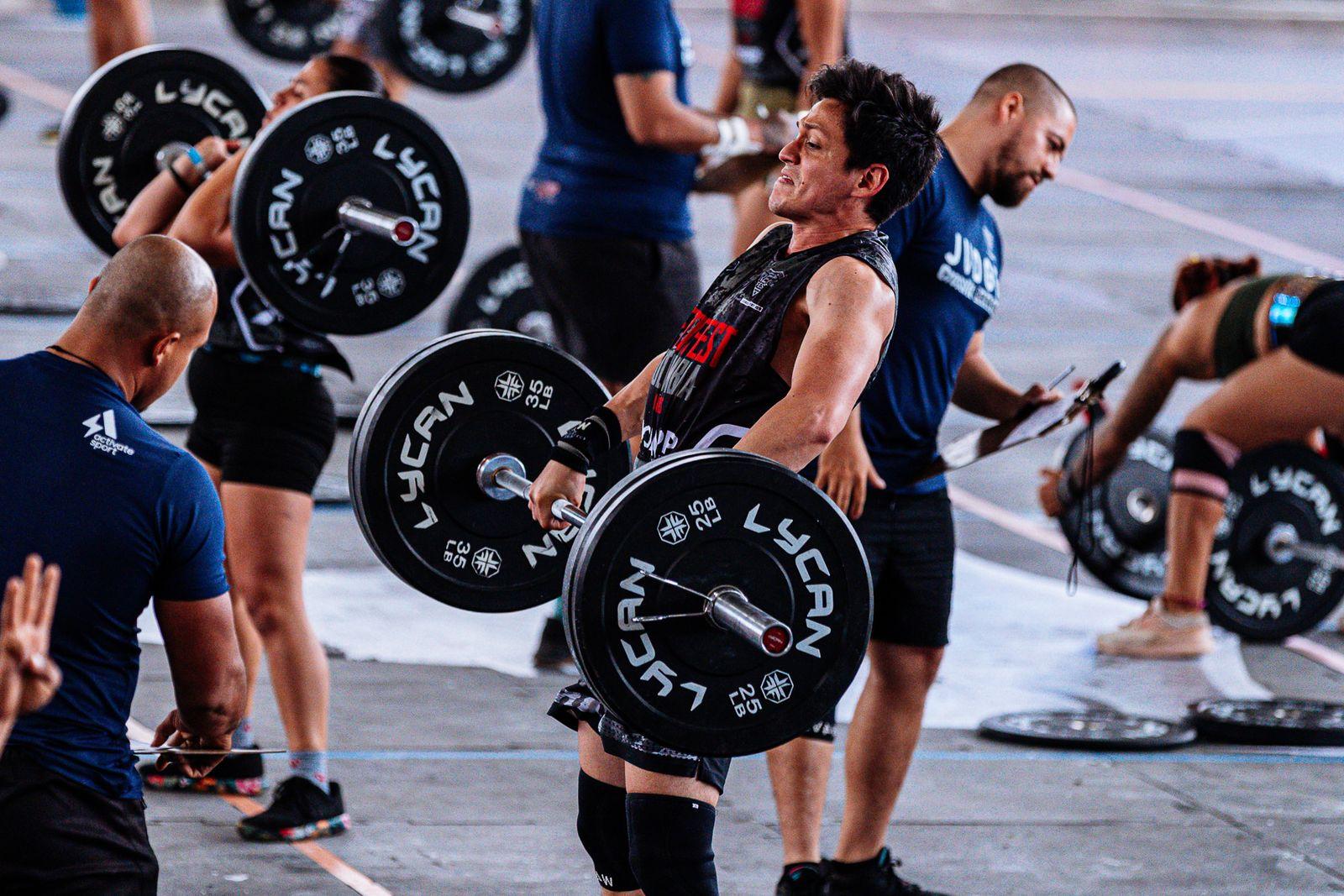
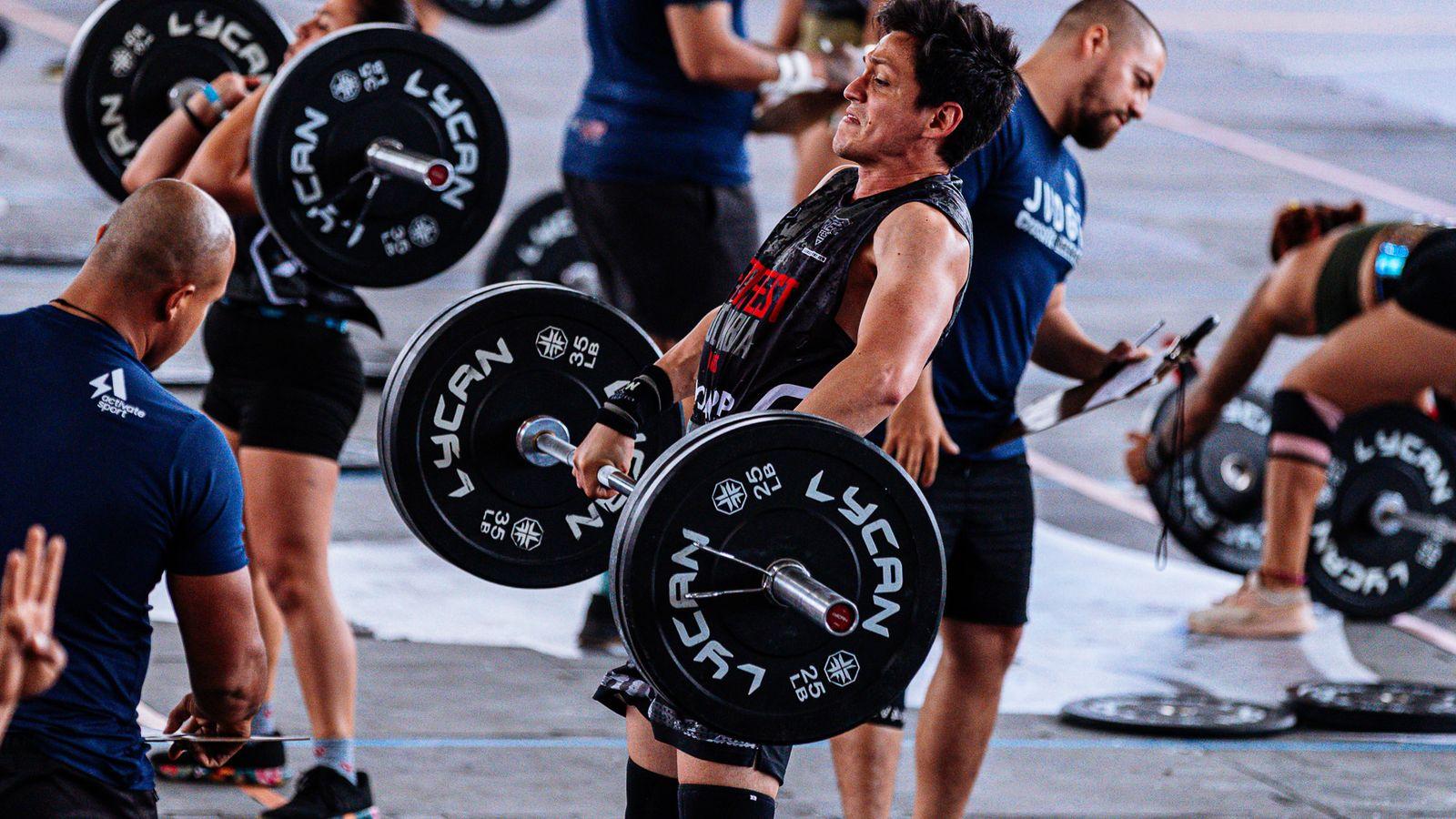
On a max lift — deadlift, clean, heavy squat — the rule changes. You don't breathe continuously. You hold your air to brace.
The move is simple: a big breath into the belly before the rep, lock the core, drive, then release at the top. That internal pressure protects the back and transfers force more efficiently.
Under a heavy load, the air in your belly acts like a natural belt. You only exhale once the sticking point is behind you.
On longer sets at a moderate load, return to smooth breathing between each rep.
Recover Your Breath Without Losing Time
When the breath drops out, a chosen micro-pause beats a forced collapse. Two or three deep breaths at the right moment restart the engine.
Plan these breaks before the start: where to break a set, which station to breathe at. Splitting 30 reps into three blocks of 10, with a breath between each, costs a few seconds but avoids a full stop. That breakdown logic ties straight into the pacing built into each WOD format.
Settle a Runaway Breath
Sometimes breathing panics: short, high, stuck in the chest. You hyperventilate, your head spins. The fix is to slow the exhale. Breathing out longer than you breathe in brings the heart rate back down.
A side stitch often comes from breathing too shallow. Breathing into the belly, expanding the abdomen rather than the shoulders, helps it pass. The same tools handle pre-event nerves — a topic we cover in our guide to mental preparation.
Breathing is a skill you build, not a gift you're born with. Test it in training, then prove it in real conditions. Ready to give it a go? Check the competition calendar and pick your next event.